Welcome message
Dear Esteemed Colleagues, Researchers, and Innovators,
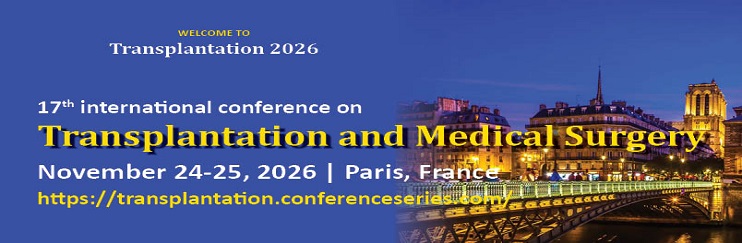
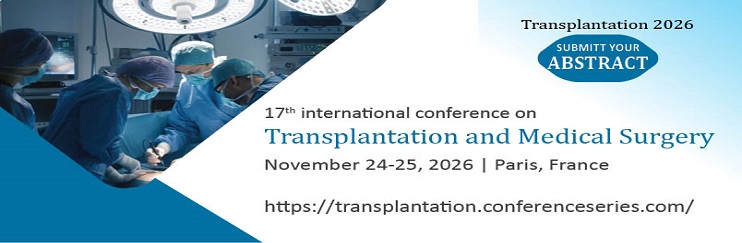
It is with great pleasure that we welcome you to the “17th International Conference on Transplantation and Medical Surgery”, taking place on November 24–25, 2026 in the vibrant city of Paris, France.
This distinguished global forum brings together leading surgeons, transplant specialists, clinicians, researchers, healthcare professionals, and academicians to share the latest advancements, innovative techniques, and breakthrough developments in transplantation and medical surgery. With a strong emphasis on improving patient outcomes and advancing surgical precision, this conference offers an exceptional platform for knowledge exchange, professional networking, and international collaboration.
Under the theme “Advancing Transplantation and Surgical Excellence for Better Patient Care”, we aim to explore emerging trends, discuss complex clinical challenges, and highlight transformative innovations shaping the future of transplantation and surgical sciences.
We look forward to your valuable contributions and active participation in discussions that will drive progress and enhance global healthcare practices.
Join us in Paris for two days of scientific excellence, meaningful dialogue, and collaborative spirit.
About Conference
Welcome to the 17th International Conference on Transplantation and Medical Surgery!
This international conference will bring together transplant surgeons, medical researchers, healthcare professionals, academicians, and industry experts from around the world to share knowledge, discuss recent advancements, and present innovative research in transplantation and medical surgery.
The conference theme, “Advancing Transplantation and Surgical Innovation for Better Patient Care,” focuses on modern surgical technologies, organ transplantation, regenerative medicine, robotic surgery, and improved patient care. The event will include keynote sessions, scientific presentations, panel discussions, and networking opportunities aimed at encouraging global collaboration and advancing the future of transplantation and surgical healthcare.
Target Audience
The 17th International Conference on Transplantation and Medical Surgery welcomes a diverse group of professionals and stakeholders involved in advancing surgical and transplant sciences, including:
-
Transplant Surgeons and Surgical Specialists
-
General Surgeons and Medical Practitioners
-
Organ Transplant Coordinators and Clinicians
-
Hepatologists, Nephrologists, Cardiologists, and Pulmonologists
-
Anesthesiologists and Critical Care Specialists
-
Nurses and Allied Healthcare Professionals
-
Biomedical Scientists and Clinical Researchers
-
Pharmaceutical and Biotechnology Industry Professionals
-
Medical Device and Surgical Technology Experts
-
Healthcare Administrators and Hospital Management Professionals
-
Regulatory Authorities and Policy Makers
-
Academicians, Professors, and Students in Medical and Life Sciences
-
Organ Donation and Transplant Advocacy Groups
This conference is designed to foster interdisciplinary collaboration and provide valuable insights for all professionals dedicated to improving outcomes in transplantation and surgical care.
Sessions and Tracks
Track:1 Advanced Organ Transplant Techniques
Innovations in organ transplantation are improving surgical precision and patient outcomes. Minimally invasive techniques, robotic-assisted procedures, and enhanced preservation methods are transforming transplant success rates. Advances in immunosuppressive therapies reduce rejection risks while maintaining patient safety. Surgeons are increasingly using AI-guided tools for better decision-making during procedures. These developments enhance graft survival, reduce recovery time, and improve quality of life. Continuous research and collaboration are essential to refine surgical techniques and expand transplant accessibility worldwide, ensuring more patients benefit from life-saving procedures.
Track:2 Innovations in Surgical Technology
Modern surgical practices are evolving with the integration of cutting-edge technologies. Robotic-assisted surgery, 3D imaging, and augmented reality are enhancing precision and reducing complications. These technologies enable surgeons to perform complex procedures with improved accuracy and minimal invasiveness. Enhanced visualization tools and digital platforms support better preoperative planning and intraoperative navigation. As technology advances, patient safety and recovery outcomes continue to improve. The adoption of innovative surgical tools ensures efficiency, reduces hospital stays, and promotes better clinical outcomes in transplantation and general surgery.
Track:3 Organ Preservation and Transport
Efficient organ preservation and transport systems are critical for successful transplantation. Advanced preservation techniques, including hypothermic and normothermic machine perfusion, help maintain organ viability during transit. These technologies extend preservation time and improve transplant outcomes. Improved logistics, monitoring systems, and real-time tracking enhance coordination between donor and recipient centers. Reducing ischemic injury and maintaining organ quality are key priorities. Continuous innovation in preservation methods ensures better utilization of donated organs and increases the success rate of transplant procedures globally.
Track:4 Immunosuppression and Rejection Management
Effective immunosuppression is essential to prevent organ rejection after transplantation. Advances in targeted therapies and personalized medicine are improving patient outcomes. Modern immunosuppressive drugs minimize side effects while maintaining graft acceptance. Monitoring biomarkers and immune responses allows clinicians to tailor treatments for individual patients. Research into tolerance induction and immune modulation is opening new possibilities for long-term transplant success. These strategies aim to reduce complications, enhance patient safety, and improve survival rates in transplant recipients.
Track:5 Ethical Challenges in Transplantation
Ethical considerations play a vital role in transplantation practices. Issues such as organ allocation, donor consent, and equitable access remain critical concerns. Transparency in organ distribution systems ensures fairness and trust. Addressing illegal organ trade and promoting ethical donation practices are global priorities. Policies and guidelines aim to protect both donors and recipients while maintaining integrity in healthcare systems. Ethical frameworks guide decision-making and ensure that transplantation practices align with social responsibility and human rights.
Track:6 Living Donor Transplantation
Living donor transplantation offers an effective solution to organ shortages. Advances in surgical techniques ensure donor safety and faster recovery. Careful evaluation and ethical considerations are essential to protect donors’ health and well-being. Improved surgical planning and minimally invasive procedures reduce risks. Living donation increases transplant success rates and reduces waiting times for recipients. Ongoing research focuses on enhancing donor outcomes and expanding eligibility criteria while maintaining safety and ethical standards.
Track:7 Post-Transplant Care and Rehabilitation
Comprehensive post-transplant care is essential for long-term success. Monitoring patient health, managing medications, and preventing infections are key components. Rehabilitation programs help patients regain strength and improve quality of life. Multidisciplinary care teams ensure holistic support for transplant recipients. Advances in telemedicine and digital health tools enable continuous monitoring and timely interventions. Effective post-operative care reduces complications and enhances overall patient outcomes, ensuring sustainable transplant success.
Track:8 Artificial Organs and Bioengineering
The development of artificial organs and bioengineered tissues is transforming transplantation medicine. Innovations in tissue engineering, stem cell research, and biomaterials are creating alternatives to donor organs. These technologies aim to address organ shortages and reduce dependency on donors. Advances in 3D bioprinting and regenerative medicine offer promising solutions for future healthcare. Artificial organs have the potential to improve patient survival and revolutionize treatment approaches in transplantation and surgery.
Track:9 Infection Control in Transplant Patients
Infection management is critical in transplant recipients due to immunosuppression. Advanced diagnostic tools and preventive strategies help reduce infection risks. Personalized treatment plans and antimicrobial therapies improve patient safety. Monitoring and early detection are essential for managing complications. Hospitals are implementing strict infection control protocols to protect vulnerable patients. Effective infection management enhances transplant outcomes and ensures long-term patient health.
Track:10 Global Trends in Transplantation
Transplantation practices are evolving globally with advancements in technology and policy. International collaboration is improving organ sharing systems and research efforts. Emerging trends include digital health integration, AI-based diagnostics, and improved surgical methods. Addressing disparities in access to transplantation remains a key challenge. Governments and healthcare organizations are working towards expanding donor programs and improving infrastructure. Global innovation and cooperation are essential to advance transplantation and ensure equitable healthcare access worldwide.
Track:11 Xenotransplantation Breakthroughs
Xenotransplantation, the transplantation of organs from animals to humans, is emerging as a promising solution to organ shortages. Advances in genetic engineering have enabled the modification of animal organs to reduce immune rejection. Recent experimental successes highlight the potential for clinical application. Ethical considerations, biosafety, and long-term outcomes remain under evaluation. With continued research, xenotransplantation could significantly expand the donor pool and offer life-saving options for patients awaiting transplants worldwide.
Track:12 Minimally Invasive Transplant Surgery
Minimally invasive approaches are transforming transplant procedures by reducing surgical trauma and recovery time. Techniques such as laparoscopic and robotic-assisted surgery enhance precision and reduce complications. These methods lead to shorter hospital stays, less postoperative pain, and quicker patient recovery. Surgeons are increasingly adopting these techniques to improve outcomes and patient satisfaction. Continuous innovation in surgical tools and training is essential to expand their application in complex transplant surgeries.
Track:13 Personalized Medicine in Transplantation
Personalized medicine is revolutionizing transplant care by tailoring treatments to individual patient profiles. Genetic testing and biomarker analysis help predict rejection risks and optimize immunosuppressive therapy. This approach enhances graft survival and minimizes adverse effects. Precision medicine allows clinicians to design customized treatment plans, improving patient outcomes. As research advances, personalized strategies will play a crucial role in enhancing the effectiveness and safety of transplantation procedures.
Track:14 Pediatric Transplantation Advances
Pediatric transplantation presents unique challenges due to the physiological and developmental needs of children. Advances in surgical techniques, immunosuppression, and post-operative care are improving outcomes in young patients. Early intervention and specialized care teams are essential for long-term success. Innovations in organ matching and preservation are increasing transplant success rates in pediatric cases. Continued research and collaboration are vital to address the complexities and improve survival rates among pediatric transplant recipients.
Track:15 Regenerative Medicine in Surgery
Regenerative medicine is opening new frontiers in transplantation and surgical care. Stem cell therapy, tissue engineering, and regenerative techniques are being developed to repair or replace damaged tissues and organs. These innovations reduce the reliance on donor organs and improve healing processes. Research in regenerative medicine is advancing rapidly, offering potential breakthroughs in treating complex surgical conditions. Integration of these technologies into clinical practice will transform future surgical and transplant outcomes.
Track:16 Organ Donation Awareness Strategies
Increasing organ donation rates is essential to address the global shortage of transplantable organs. Public awareness campaigns, education programs, and policy initiatives play a critical role in encouraging donation. Building trust and transparency in the donation process is key to public acceptance. Digital platforms and social media are being used to promote awareness and engagement. Effective strategies can significantly increase donor registrations and save more lives through timely transplantation.
Track:17 AI and Data Analytics in Surgery
Artificial intelligence and data analytics are transforming surgical decision-making and patient care. AI-powered tools assist in diagnosis, surgical planning, and outcome prediction. Data-driven insights help optimize treatment strategies and improve precision in complex procedures. Machine learning algorithms can identify patterns and enhance clinical efficiency. The integration of AI into surgical practice is expected to improve patient safety, reduce errors, and advance the field of transplantation and medical surgery.
Track:18 Multi-Organ Transplantation
Multi-organ transplantation involves the simultaneous transplantation of more than one organ, offering solutions for patients with multiple organ failures. Advances in surgical coordination, preservation techniques, and immunosuppression are improving success rates. These complex procedures require multidisciplinary collaboration and precise planning. Improved patient selection and perioperative care are critical for positive outcomes. Continued innovation is enhancing the feasibility and effectiveness of multi-organ transplants.
Track:19 Surgical Training and Simulation
Modern surgical training is evolving with the use of simulation technologies and virtual reality. These tools provide hands-on experience in a risk-free environment, allowing surgeons to refine their skills. Simulation-based training enhances precision, confidence, and preparedness for complex procedures. Continuous education and skill development are essential in keeping up with advancements in transplantation and surgery. These innovations are shaping the next generation of skilled surgical professionals.
Track:20 Telemedicine in Post-Surgical Care
Telemedicine is playing a vital role in post-surgical and post-transplant care. Remote monitoring and virtual consultations enable continuous patient follow-up and timely intervention. This approach improves accessibility, especially for patients in remote areas. Digital health tools help track recovery, manage medications, and detect complications early. Telemedicine enhances patient engagement and reduces the need for frequent hospital visits, contributing to better long-term outcomes in transplantation and surgical care.
Market Analysis
Transplantation and Medical Surgery
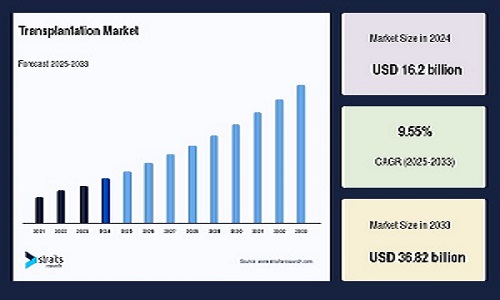
The global transplantation and medical surgery market is witnessing significant growth, driven by increasing prevalence of chronic diseases, rising organ failure cases, and advancements in surgical technologies. The market is estimated to exceed USD 120 billion by 2026 and is projected to grow at a CAGR of 7–9% over the next decade.
Key growth drivers include the rising demand for organ transplants, technological innovations such as robotic-assisted surgeries, and improvements in organ preservation techniques. The adoption of minimally invasive procedures is enhancing patient outcomes, reducing recovery time, and lowering healthcare costs. Additionally, advancements in immunosuppressive drugs are improving graft survival rates and reducing rejection risks.
The increasing integration of artificial intelligence, 3D imaging, and precision medicine is transforming surgical planning and execution. Emerging areas such as xenotransplantation and regenerative medicine are expected to further expand the market potential. Government initiatives and awareness programs promoting organ donation are also contributing to market growth
However, challenges such as organ shortages, high procedural costs, and ethical considerations remain significant barriers. Despite these challenges, continuous research, innovation, and global collaboration are expected to drive sustainable growth in this sector.
Overall, the transplantation and medical surgery market is evolving rapidly, offering promising opportunities for improving patient care and advancing global healthcare systems.